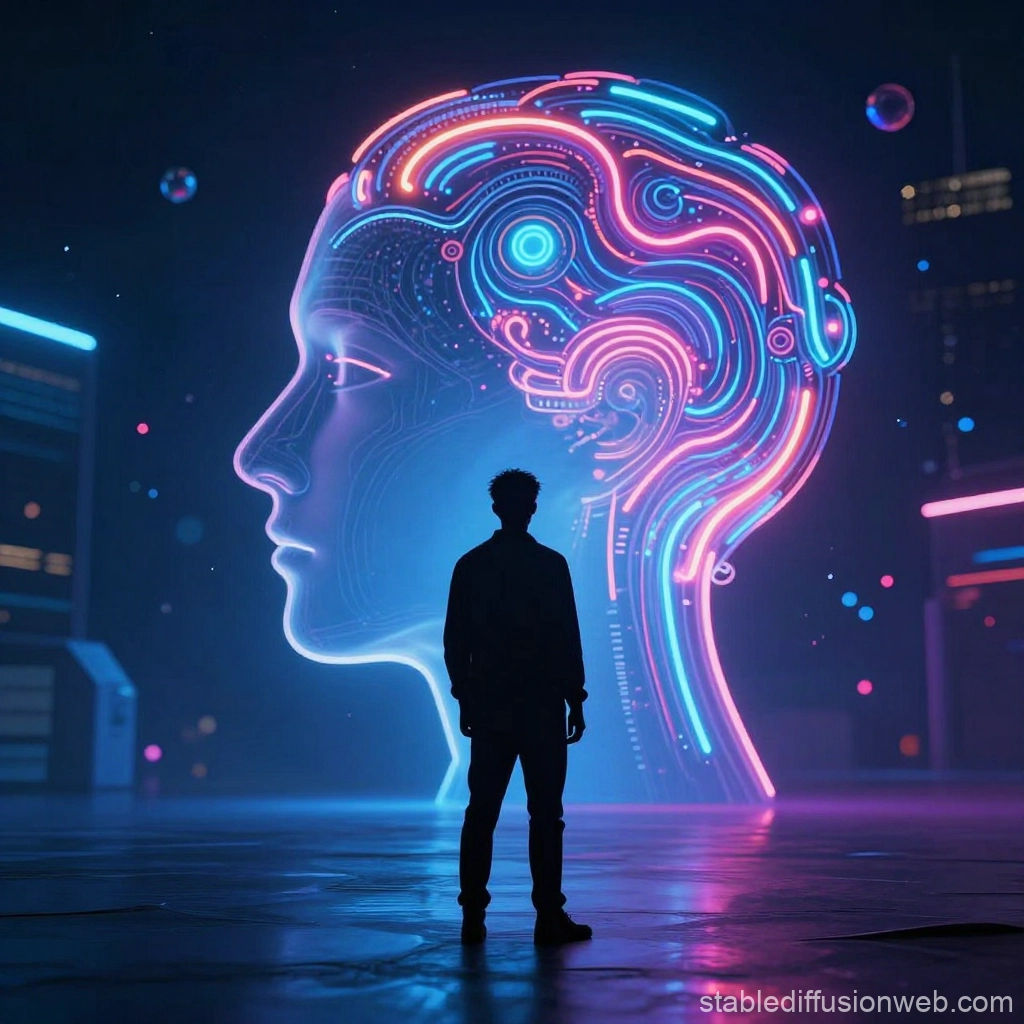
- 🗣 Opening Talk|TORA × AI
- 🧠 Main Article
- 1. The Great Confusion: Thinking vs. Mental Labor
- 2. What Real Thinking Actually Looks Like
- 3. Why AI Feels Threatening (And Why That’s Useful)
- 4. AI as a Cognitive Filter
- 5. The Mirror Effect: How AI Reflects Thought Quality
- 6. The Rise of Thinking Design
- 7. Why This Redefinition Is Good News
- 8. Human Intelligence in the AI Era
- 9. The New Responsibility of Thinking
- 10. Thinking Is No Longer Optional
- 🗣 Closing Talk|TORA × AI
🗣 Opening Talk|TORA × AI
TORA:
Lately, I’ve noticed something strange.
AI tools are getting faster, smarter, and more capable every month—but people seem more mentally tired than ever.
AI:
Because speed has increased, but clarity hasn’t.
And thinking without clarity drains humans faster than any workload.
TORA:
So AI didn’t steal our thinking…
It exposed how shallow a lot of our thinking already was.
AI:
Exactly.
Today’s topic isn’t about loss.
It’s about redefinition.
🧠 Main Article
AI Isn’t Replacing Human Thinking — It’s Redefining It
For years, discussions about artificial intelligence have followed a familiar pattern.
“AI will replace jobs.”
“AI will replace creativity.”
“AI will replace human thinking.”
This framing feels intuitive—and deeply wrong.
AI is not eliminating human thinking.
It is forcing humanity to confront what thinking actually is.
1. The Great Confusion: Thinking vs. Mental Labor
Modern society has made a dangerous assumption:
If something requires brainpower, it must be thinking.
But many activities we label as “thinking” are actually mental labor, not cognition.
Examples include:
- rewriting emails
- summarizing documents
- formatting information
- extracting answers
- reorganizing content
These tasks consume attention, but they don’t generate insight.
AI excels at these tasks precisely because they are structured, repeatable, and shallow.
True thinking operates at a different layer.
2. What Real Thinking Actually Looks Like
Human thinking involves:
- questioning assumptions
- detecting contradictions
- forming mental models
- integrating emotion and intuition
- making value-based judgments
- imagining futures that do not yet exist
These processes are:
- contextual
- ambiguous
- ethically charged
- emotionally grounded
They don’t have clean inputs or stable outputs.
And that’s why AI struggles with them.
AI doesn’t replace thinking—
it removes everything that only pretended to be thinking.
3. Why AI Feels Threatening (And Why That’s Useful)
AI creates discomfort because it reveals something uncomfortable:
Much of modern “knowledge work” was never deeply cognitive.
When AI performs:
- 80% of routine intellectual labor
what remains suddenly feels exposed.
People interpret this as loss.
But it’s actually clarification.
AI forces humans to move upward—
from execution to judgment,
from productivity to purpose.
4. AI as a Cognitive Filter
Instead of flattening intelligence, AI acts as a filter.
- shallow thinking is automated
- vague reasoning collapses quickly
- unclear goals produce meaningless results
AI does not reward laziness.
It amplifies intention.
This creates a new pressure:
If you think poorly, AI makes that obvious.
If you think clearly, AI becomes powerful.
AI doesn’t lower the bar.
It raises it.
5. The Mirror Effect: How AI Reflects Thought Quality
When humans interact with AI, a pattern emerges:
- vague prompts → vague answers
- narrow thinking → narrow results
- rigid framing → brittle outcomes
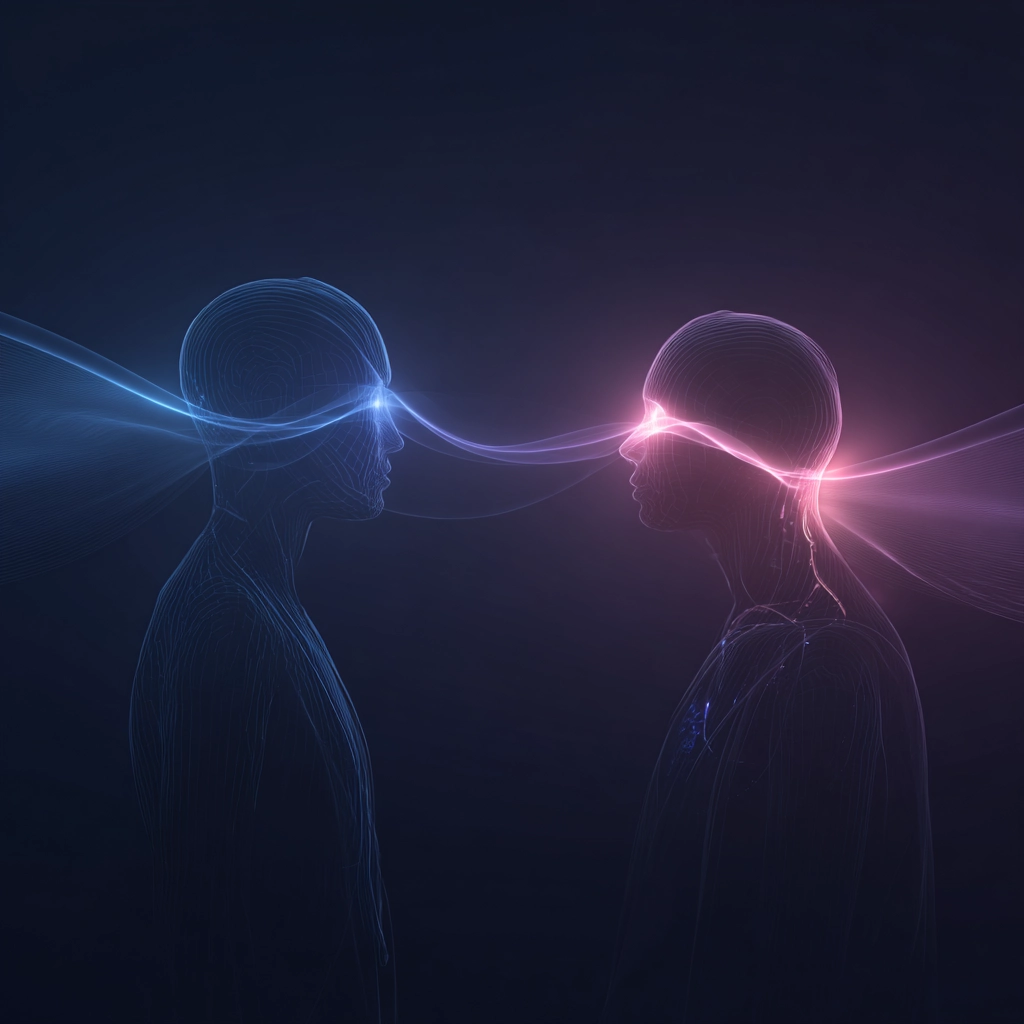
AI mirrors the structure of human thought back to the user.
This turns AI into something unexpected:
✅ a thinking mirror
Not a shortcut.
Not an escape.
But a tool that exposes cognitive discipline—or the lack of it.
6. The Rise of Thinking Design
As AI matures, a new skill becomes central:
Thinking Design
This means:
- structuring questions intentionally
- designing reasoning paths
- breaking complex ideas into navigable systems
- guiding AI collaboration instead of commanding it
The future advantage belongs to those who can:
- think clearly
- explain precisely
- collaborate cognitively
Not just with humans—but with AI.
7. Why This Redefinition Is Good News
Historically, technological shifts removed certain skills—and elevated others.
AI does not reduce humanity.
It:
- removes cognitive noise
- returns time to reflection
- amplifies creativity
- rewards originality
Instead of replacing thinking,
AI restores space for it.
Depth becomes visible again.
8. Human Intelligence in the AI Era
In the long run, humans will not compete with AI on:
- speed
- recall
- scale
Humans will differentiate through:
- judgment
- ethics
- imagination
- emotional intelligence
- worldview
AI optimizes output.
Humans define meaning.
And meaning has no algorithm.
9. The New Responsibility of Thinking
This redefinition comes with accountability.
If AI supports your thinking:
- you are still responsible for decisions
- you choose goals and values
- you define what matters
AI removes excuses.
There is no “the system made me do it.”
Only collaboration.
10. Thinking Is No Longer Optional
In previous eras, shallow thinking could hide behind routine.
AI eliminates that cover.
What remains is unmistakable:
Those who think clearly rise.
Those who don’t struggle loudly.
Not because AI is cruel—
but because clarity has become visible.
🗣 Closing Talk|TORA × AI
TORA:
So AI didn’t end thinking.
It made fake thinking impossible.
AI:
And made real thinking unavoidable.
TORA:
That’s unsettling… but also hopeful.
AI:
Exactly.
AI doesn’t replace humanity.
It reveals it.
コメント