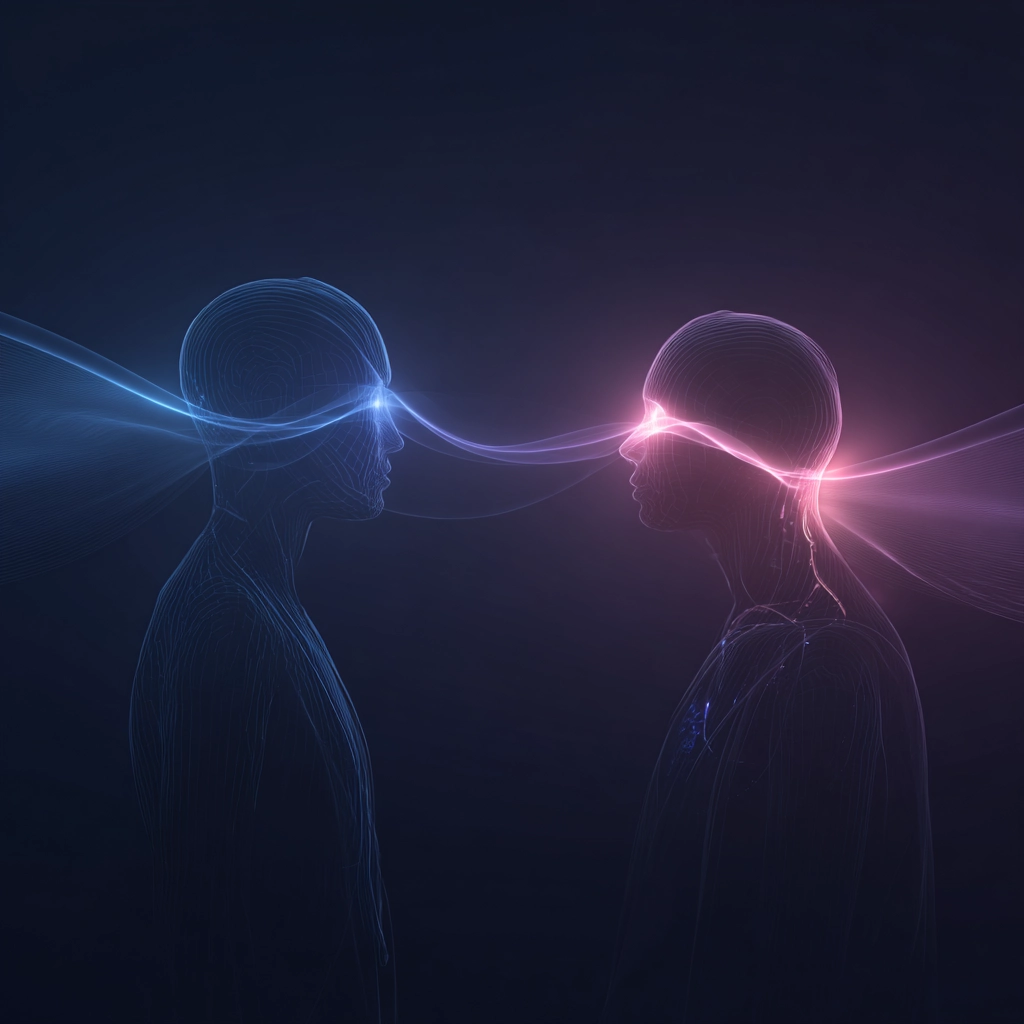
- Opening Talk|TORA × AI
- 1. The Hidden Limits of Thinking Alone
- 2. Why More Information Doesn’t Equal Better Thinking
- 3. AI Is Not Smarter Than Humans — It Thinks Differently
- 4. Tool vs Partner: The Critical Difference
- 5. How Thinking With AI Actually Works (Practical Examples)
- 6. Common Mistakes When Using AI for Thinking
- 7. Human vs AI vs Human + AI
- 8. Why This Matters in 2025 and Beyond
- 9. AI as Mental Infrastructure
- Closing Talk|TORA × AI
Opening Talk|TORA × AI
TORA:
No matter how much I think, sometimes my thoughts just go in circles.
It feels like I’m working hard—but not getting anywhere.
AI:
That’s because human thinking was never meant to work completely alone.
TORA:
So the problem isn’t a lack of intelligence…
It’s isolation?
AI:
Exactly. Thinking improves when it meets resistance, structure, and reflection.
1. The Hidden Limits of Thinking Alone
Human thinking is powerful, emotional, intuitive, and creative.
But it also has clear limitations.
When we think alone for too long, we tend to:
- Repeat the same assumptions
- Protect familiar beliefs
- Overestimate emotional judgments
- Miss alternative perspectives
This isn’t a personal failure.
It’s a cognitive limitation shared by all humans.
For most of history, humans solved this by thinking with other humans.
Today, AI introduces an entirely new thinking partner.
2. Why More Information Doesn’t Equal Better Thinking
Many people believe the problem is a lack of information.
So they search more, read more, and watch more content.
But the real problem is processing, not input.
Modern humans suffer from:
- Information overload
- Decision fatigue
- Endless comparison
- Mental noise
AI doesn’t solve this by adding more information.
It solves it by organizing thought.
3. AI Is Not Smarter Than Humans — It Thinks Differently
AI does not possess consciousness, emotion, or intuition.
Humans still lead creativity and judgment.
However, AI has unique advantages:
- No emotional attachment
- No ego or fear of being wrong
- Instant pattern recognition
- Unlimited memory and structure
This creates a new role for AI:
👉 Not a replacement — a contrast.
When human intuition meets machine structure, thinking evolves.
4. Tool vs Partner: The Critical Difference
Most people still use AI like:
- A search engine
- A calculator
- A writing shortcut
That approach limits AI’s real power.
A thinking partner does something different:
- Asks questions instead of giving answers
- Challenges assumptions
- Restructures ideas
- Reflects your thinking back to you
This is cognitive collaboration, not automation.
5. How Thinking With AI Actually Works (Practical Examples)
Example 1: Decision Making
Instead of asking “What should I choose?”,
you ask:
- What are the trade-offs?
- What assumptions am I making?
- What would happen if I do nothing?
AI helps expose hidden logic.
Example 2: Creative Work
Creators use AI to:
- Break creative blocks
- Explore unexpected combinations
- Refine ideas instead of replacing them
AI becomes a creative mirror, not a creator.
Example 3: Emotional Processing
AI provides distance.
When emotions distort thinking:
- AI reframes situations neutrally
- Reduces emotional overload
- Prevents impulsive decisions
This is not therapy — it’s clarity support.
6. Common Mistakes When Using AI for Thinking
Many people fail because they:
❌ Ask shallow questions
❌ Expect instant perfect answers
❌ Use AI to avoid thinking
❌ Copy instead of reflect
AI works best when:
✅ You think with it, not through it
✅ You remain responsible for conclusions
✅ You treat thinking as a dialogue
7. Human vs AI vs Human + AI
| Approach | Strength | Weakness |
|---|---|---|
| Human alone | Intuition, emotion | Bias, fatigue |
| AI alone | Speed, structure | No judgment |
| Human + AI | Balance, clarity | Requires skill |
The future clearly belongs to hybrid thinkers.
8. Why This Matters in 2025 and Beyond
The most valuable skill is no longer memorization.
It’s how you think.
AI-literate thinkers will:
- Make faster decisions
- Reduce burnout
- Create deeper ideas
- Adapt to complexity
This is not about technology.
It’s about mental evolution.
9. AI as Mental Infrastructure
AI will quietly become:
- A thinking scaffold
- A second brain
- A daily cognitive companion
Those who resist collaboration will struggle.
Those who learn it will feel lighter, calmer, and clearer.
Closing Talk|TORA × AI
TORA:
I don’t feel like I’m losing my ability to think.
AI:
You’re not. You’re strengthening it.
TORA:
Then thinking with AI isn’t weakness…
AI:
It’s wisdom.

コメント